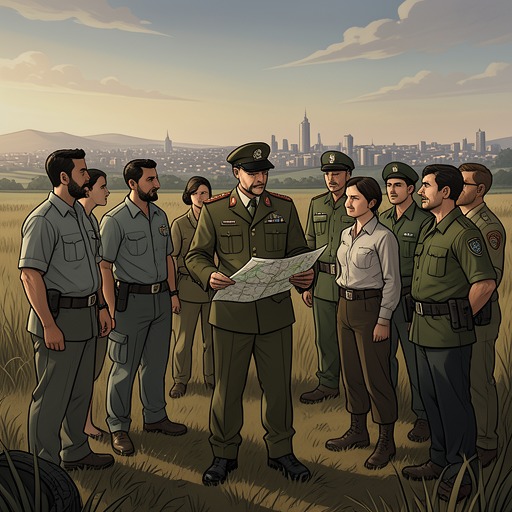
The Great Campaign of '75
The SympathizerThe Great Campaign of '75 appears in the unnamed narrator’s account as the moment the People's Army of Vietnam first struck in its liberation of the south. Its significance here is both military and intimate: the campaign’s opening is located in the narrator’s hometown, a place he identifies through family deaths and the burial of his umbilical cord as well as through its place in the war.
Recalled Through a Speech
The campaign enters the passage during a Poet’s public description of an American Dream: returning to a peaceful homeland and walking through its cities, villages, and farms. The imagined journey ranges across the country, but the narrator says he has already gotten off at his hometown. That shift from the Poet’s broad itinerary to the narrator’s particular place makes the campaign part of a personal recollection rather than a separate military account.
The Hometown as a Historical Site
The narrator identifies his hometown as the place where the People's Army of Vietnam struck first during the campaign. The passage offers no account of the attack’s tactics or immediate results; instead, the historical claim is set among details that make the place his own. It is a hill town of red earth and coffee country, and the land where his mother and father died. His umbilical cord lies buried in his mother’s small plot there, joining birth and family loss to the landscape in which the campaign began.
Significance
This brief reference makes national history inseparable from the narrator’s embodied sense of home. The campaign marks the start of a liberation offensive, but the narrator’s description also carries the cost and intimacy of that history: the same ground holds his origins and his parents’ deaths. Set against the Poet’s dream of returning to a peaceful country, the recollection gives the imagined home a sharply personal geography, shaped by war as well as longing.